Portfolio
Projects ready to launch
Current Digitvest projects and product websites. Each can be sold as-is, customized, or used as a foundation for a new market.
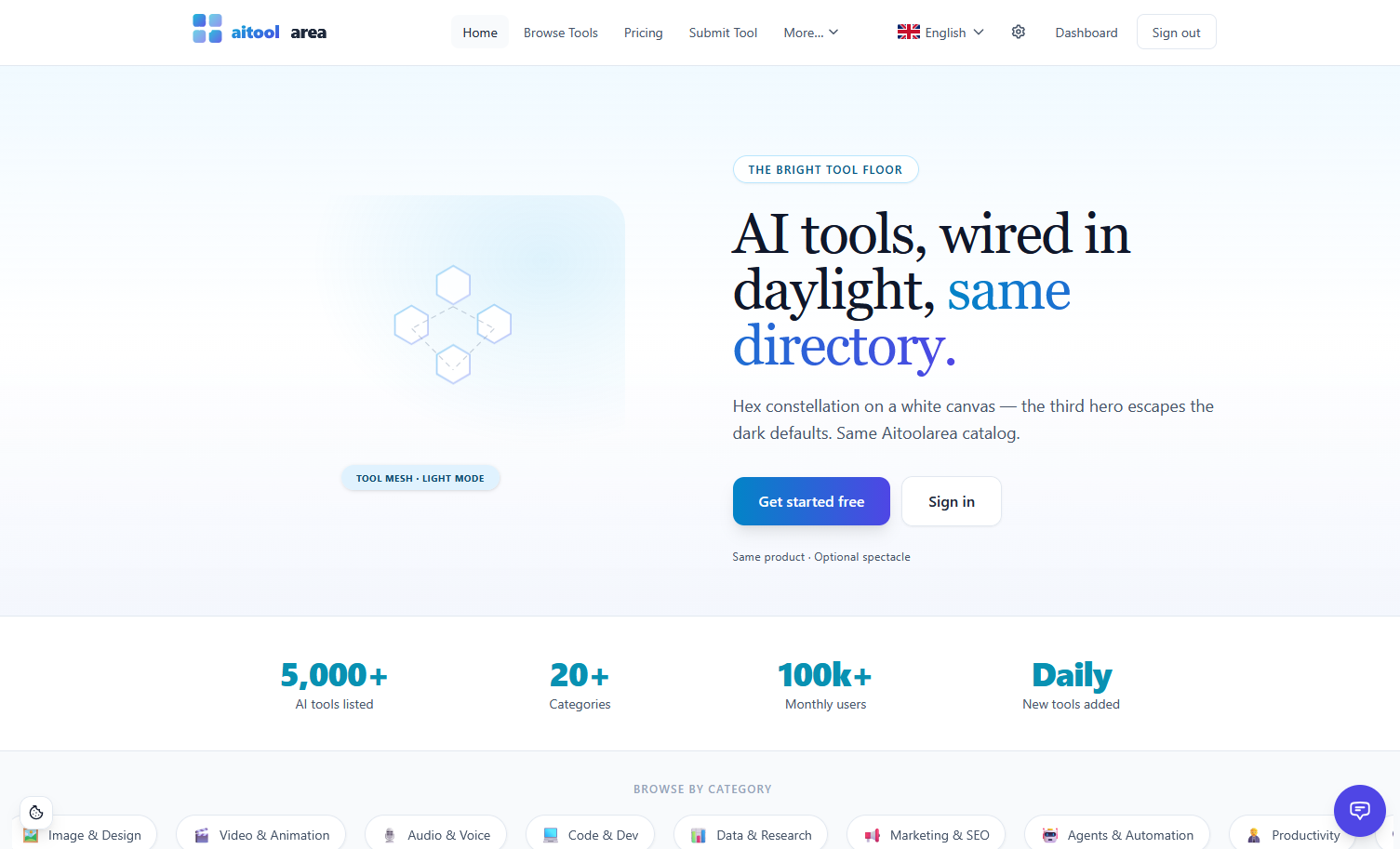 AI Tools Directory
AIToolArea
Overview AIToolArea is built for people who are tired of random “top 10 AI tools” posts that all say the same thing. The public site is a discovery engine first: visitors can search by use case, browse by category, and open structured profile pages that answer what a tool actually does, who it is for, how pricing typically works, and which alternatives are worth a look. The layout is intentionally calm and scannable, with clear headings, short feature lists, and plenty of white space so users can compare options without feeling sold to in every paragraph. What the public experience delivers • Search- and category-first navigation so high-intent visitors land in the right place from organic search. • Consistent tool profiles with comparable sections (features, limits, pricing signals, alternatives) so the site feels like a real directory, not a random blog. • Modular marketing zones for email capture, sponsored placements, and affiliate or partner CTAs as you tune monetization. • Room for editorial voice such as editor’s picks, seasonal roundups, and (later) community reviews without breaking the template. • Performance-oriented templates that load fast and work well on mobile, where a large share of research traffic arrives. Why the information architecture matters Category hubs create natural landing pages for long-tail queries, while cross-links between related tools help both humans and search engines understand how the space fits together. For an operator, that means the property can work as a pure media play, a lead-generation surface, or a bridge to sponsored listings—funnels are modular and can be rotated as you learn which segments convert. Nothing in the design locks you into a single business model. Trust is handled through consistency and tone: listings follow a shared template, the default copy reads businesslike, and the experience scales when you add subcategories, regional pages, or new verticals without rebuilding the whole front end. Analytics, growth, and A/B testing Instrument categories and outbound clicks to see which topics drive the most session time and which vendors get the traffic. Watch multi-step paths (signups, shortlists, downloads) to find drop-off and test layout or copy. Run experiments on CTA placement, comparison modules, and pricing callouts with clear before/after metrics. Add accounts or paywalls later if you want to convert anonymous research traffic into a logged-in audience for newsletters or premium data. Longer-term value The same information model can power newsletter digests, saved shortlists, and API- or data-oriented partnerships where curated metadata itself becomes the product. Accessibility and performance are part of the implied roadmap: typography stays readable, keyboard users can still navigate category rails, and heavy imagery is not required for the default theme—so the asset ages well as expectations for Core Web Vitals and inclusive design keep rising. Overall, AIToolArea is a turnkey directory and media property: SEO-aware, conversion-aware, and flexible for the next owner’s go-to-market.
 Career Product
CV4Biz
Overview CV4Biz is a career-focused product for job seekers, consultants, and professionals who need a high-quality online presence without wrestling with generic “drag everything” site builders. The public experience is built around guided flows: visitors see quickly what the product offers, how onboarding works, and what they get at each step before they are asked to commit time or data. The tone is direct and helpful, with emphasis on conversion paths such as sign-up, profile completion, and export or share actions that make the product feel “finished” on day one. Beyond a static resume The site positions the property as more than a PDF on the web. Structured sections for work history, skills, projects, and optional media help a profile read well on mobile and desktop—critical when a recruiter skims many candidates. You can think of it as a lightweight personal brand system: enough structure to look professional, enough flexibility to show personality where it matters. That balance fits markets where “good enough PDFs” are no longer enough, but not every buyer will pay enterprise outplacement prices. Commercial levers for the next owner • Subscription, one-time purchase, or hybrid pricing with clear trial or freemium storylines. • Add-on modules such as AI-assisted copy, template packs, and custom-domain hosting. • Outcome-driven messaging (interviews, clarity, speed to apply) so visitors connect emotionally before the feature list. • B2B bundles with coaches, schools, and job boards where the public story is easy to retell. Product and trust surface The technical story fits a stack with database, auth, and integrations: profile data can power PDFs, public URLs, or employer-facing views; an admin layer can support moderation, abuse signals, and cohort analytics. Privacy matters for career data—the public pages leave headroom for data-handling language, account controls, and straightforward deletion and export descriptions. Growth angles Localization and regional CV norms as a premium add-on. Print-ready and ATS-friendly export for serious job seekers. Optional verification for credibility without bloating the first run. Partner channels such as bootcamps, universities, and marketplaces that need a co-branded profile experience. In short, CV4Biz is a polished, conversion-oriented digital asset the next owner can aim at solo professionals, global candidates, or B2B bundles. The narrative, UX patterns, and expansion hooks are aligned with a serious, modern hiring ecosystem rather than a toy single-page app.
 Content SaaS
Blogpostr
Overview Blogpostr is a content-operations product for teams and solo operators who need to plan, create, and ship articles without living inside a dozen disconnected tools. The public marketing site makes a single promise obvious: a workflow from idea to published piece with less friction, plus enough structure to keep quality, governance, and SEO basics from slipping through the cracks. Visitors can see how editorial calendars, draft states, and publishing connect in one system—which matters when the buyer is already tired of “yet another writing app.” What the positioning emphasizes • Outcomes that editors are measured on: consistency, on-brand tone, and repeatable publishing cadence—not only “AI features.” • The layer above the document: assignments, review, metadata, and handoff, compared to a generic file editor. • Agency-friendly angles such as client workspaces, approvals, and white-label paths if you move upmarket. • A modular story so you can test AI drafting, SEO tooling, or collaboration on vertical landing pages without a site rewrite. Go-to-market and sales motion The site layout can support both self-serve PLG (trial, integrations list, help content) and sales-assisted motion (case studies, security pages, enterprise CTAs) without visual clash. The information architecture is intentionally modular: you can emphasize different wedges—AI, SEO, governance—in separate funnels as demand becomes clear. On the product story The marketing can honestly describe an editorial dashboard, roles, and a publishing pipeline, while leaving room to explain how teams avoid duplicate work, use comments instead of email chains, and tie analytics back to business goals. That foundation supports land-and-expand when new seats are added to the same workspace. Technical and platform notes Integrations with headless CMS patterns, static site generators, and webhooks can live on deeper pages, which helps in mixed IT environments. Governance requirements—roles, approvals, protected sections—can be introduced without making the home page feel “enterprise only.” Overall, Blogpostr reads as a serious content SaaS brand: clear ICP, room for AI where it adds leverage, and a public surface that can grow with more proof and integrations over time.
 Growth Tool
ViralSendr
Overview ViralSendr is a growth and distribution product for makers, marketers, and small teams who need to launch campaign-style landing pages that capture interest, encourage sharing, and feed email or CRM systems reliably. The public experience spotlights speed to launch, referral mechanics, and the metrics that matter in the first days of a release: signups, shares, conversion rate, and list growth. The design language is energetic but still trustworthy for consumer-leaning campaigns and acceptable for B2B-adjacent launches when styled appropriately. When referral loops show up in the wild • Pre-launch waitlists and invite-only betas • Seasonal promos and limited-time product drops • Referral rewards (“share to unlock” or “invite N friends”) • Viral list growth with clear, fair rules and defensible deliverability The marketing copy can walk a visitor through a simple story: build a page, set rewards, connect email, and watch the loop. Familiar mental models make A/B testing straightforward once traffic arrives. For operators: instrumentation and abuse • UTM-friendly URLs, events, and repeat-visit behavior to measure loop quality, not just top-of-funnel vanity metrics. • Fraud and abuse addressed with rate limits, validation, and fair-use language—serious buyers expect this before wiring real incentives. • Pricing that survives spikes: flat plans, per-campaign fees, or credits for message volume. Mature pitch elements Deliverability: double opt-in, bounce handling, throttling—named as first-class, not an afterthought. Compliance in context: consent logs and regional options without scaring off SMBs on the home page. Partners and agencies: kits, revenue share, and reusable brand templates to compound growth after first wins. A dashboard narrative (templates, controls, reusing past campaigns) shortens the path from “I will need this again next quarter” to retention and expansion. In summary, ViralSendr pairs a clear loop mechanic with a modern, analytics-friendly footprint and the trust language needed to run incentives responsibly at scale.
 Recruiting Tool
AIJobr
Overview AIJobr is a recruiting- and job-market-facing property built around funnels: candidates can discover roles, start applications, and move through qualification steps without a clunky experience, while teams collect structured data that maps to ATS, spreadsheets, or CRM. The public site leads with clarity: what roles are in scope, what the process is, and what happens after someone submits. That is essential in a category where “black hole applications” are the default fear. For candidates and employers Candidates can be offered messaging around matching, status transparency, and fewer redundant questions. Employers can see the same framework as lead capture, screening, and routing—without the product needing to sound like a full enterprise HR suite on day one. A lean wedge (hosted job pages, structured forms) can expand into scheduling, assessments, and integrations as revenue and trust grow. Trust, compliance, and process expectations • Plain-language descriptions of data use, retention, and who can see applications. • Expectations for response time, steps, and what a “qualified” handoff means—reducing junk leads and mismatch meetings. • Mobile-first flows, because a large share of job seekers apply from phones in short windows of time. GTM: vertical, SMB, and partner paths SMB and growing companies with recurring hiring needs and limited HR tooling. Agencies and RPO-style players who can white-label the same engine across clients. Niche verticals (e.g. logistics, care, creative) with tailored copy and form schemas. Analytics can highlight which roles convert, which sources bring qualified applicants, and where people abandon—standard optimization loops for a conversion-led product. Technical shape (without overpromising) The property fits webhooks, event tracking, and CRM handoff honestly described on deeper pages, while the MVP story remains: a site that makes applications measurable and less painful—a defensible through-line for a recruiting web asset the next owner can build on with automation where it actually helps, not just where it sounds trendy.
 Marketplace
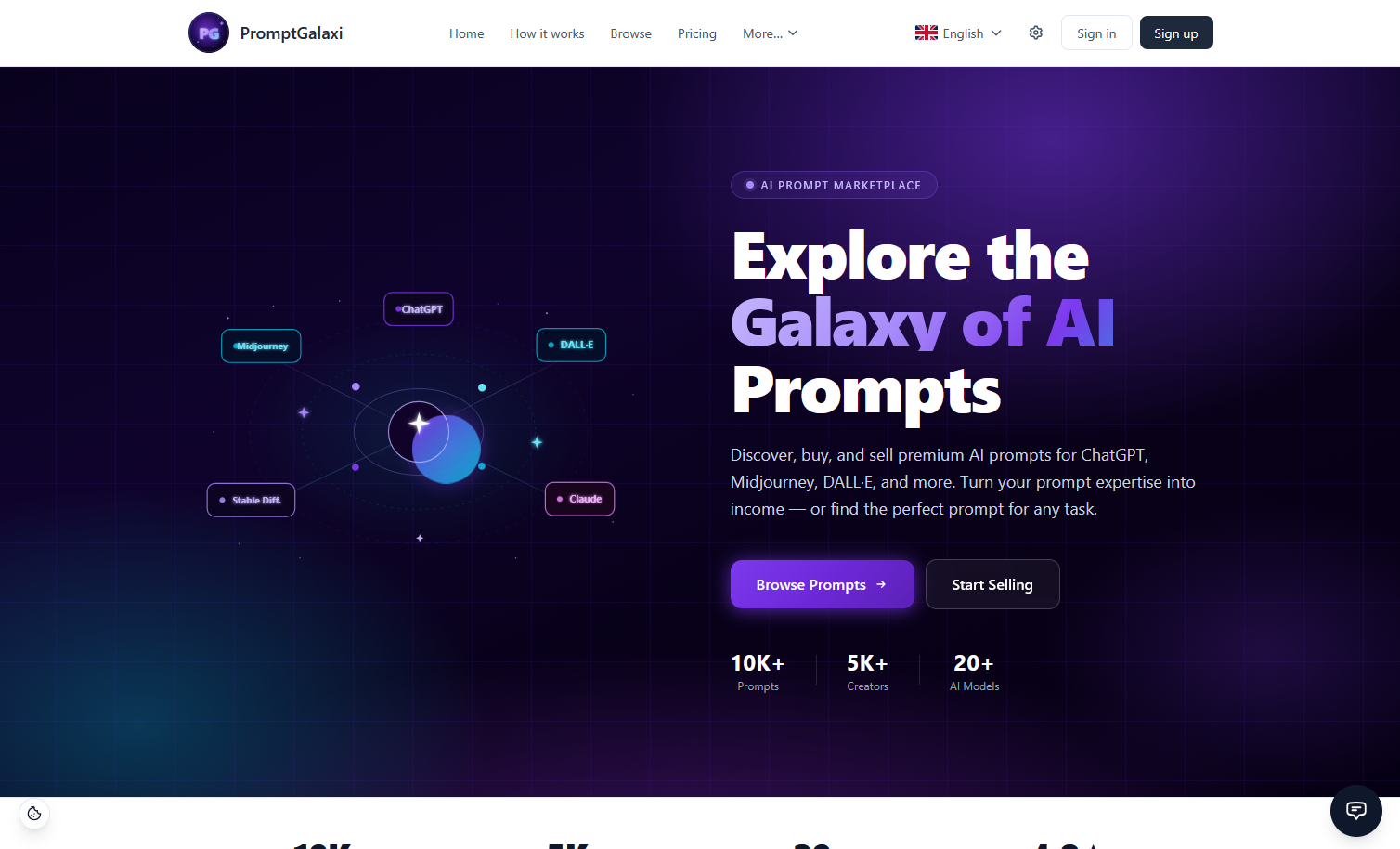
PromptGalaxi
Overview PromptGalaxi is a digital storefront and account experience for people who buy and use prompt packs, templates, and related creative assets. The public site reads as a marketplace: you can see what is for sale, how access works, and what happens after purchase—whether that is download, a hosted library, or subscription entitlements depending on how the operator configures the business. The tone can speak to hobbyists and prosumers who already pay for software, which matters when price points and refund expectations vary. What a strong marketplace page includes • Category navigation (copy, code, image workflows, productivity, etc.) with room for search and “staff pick” curation. • Product detail with example outputs, compatibility notes, and version or update history when models change. • Checkout and account storylines: receipts, re-downloads, seats, and fair use—without hiding policy in fine print only. • Creator programs and revenue share, if inventory scales beyond a single author. Business models the same foundation supports One-time purchases for specific packs. Memberships with rotating catalogs and member pricing. Team and bulk licensing for consultancies and agencies. API or batch access for automation-heavy buyers (described on deeper pages). Why “prompt inventory” is a product, not a file dump Versioning and maintenance matter when underlying models change: a marketplace that educates customers and updates listings earns better reviews and repeat revenue. The brand can position prompts as versioned SKUs with clear licensing, not as disposable text files. Technical and operations fit A modern stack story includes Stripe, role-based access, email receipts, disputes, and optional VAT—all named without over-specifying vendors. Analytics can follow classic marketplace patterns: category performance, cohort revenue, and repeat purchase by creator or collection. Overall, PromptGalaxi is a compact but expandable commerce brand: clear ICP, healthy upsell paths, and a story that can survive beyond the first wave of AI hype because the value is curated, licensed, and sold with care.
 Creator SaaS
VideoGenr
Overview VideoGenr is a creator-facing SaaS product built around a simple promise: turn ideas into video outputs with a workflow that does not require a full production team on day one. The public site explains the path from project creation to render or export, including what users should expect for processing time, formats, and quality options. The tone is practical: content teams, marketers, and small businesses who need video often enough to pay, but not so often that a studio retainer is automatic. What the value story highlights • Templates and repeatable formats so channels can ship on a schedule, not only “one-off magic renders.” • Collaboration: review links, brand kits, and shared projects to cut email back-and-forth. • Honest queue language: video is resource-intensive; reliability, notifications, and retry behavior are part of a serious pitch. • Trust for rights and content policy without turning the first screen into a legal wall—deeper pages carry the detail. Expansion and upsell that map to real unit economics • Storage, longer duration, higher resolution, priority processing, team seats. • Add-on modules such as captions, thumbnails, stock integration, and simple audio tooling—coherent with a “creative operations hub” story. • Format presets for social so safe zones and aspect ratios are not a manual fix every time. Analytics the next owner can actually run Activation: first successful render in session. Habit: exports per week, projects per month. Retention by plan and by channel (product-led vs sales-assisted, if you add that later). Enterprise-friendly notes (retention, “bring your own bucket,” lifecycle policy) can live on dedicated trust pages so consumer-friendly messaging still wins above the fold. Positioning summary VideoGenr is a modern video workflow brand: dashboard-shaped narrative, credible upsell, and room to wire storage and job queues the right way—not as an afterthought. Educational and performance use cases can coexist in the same product story with format discipline and operational clarity at the center.
 Creator SaaS
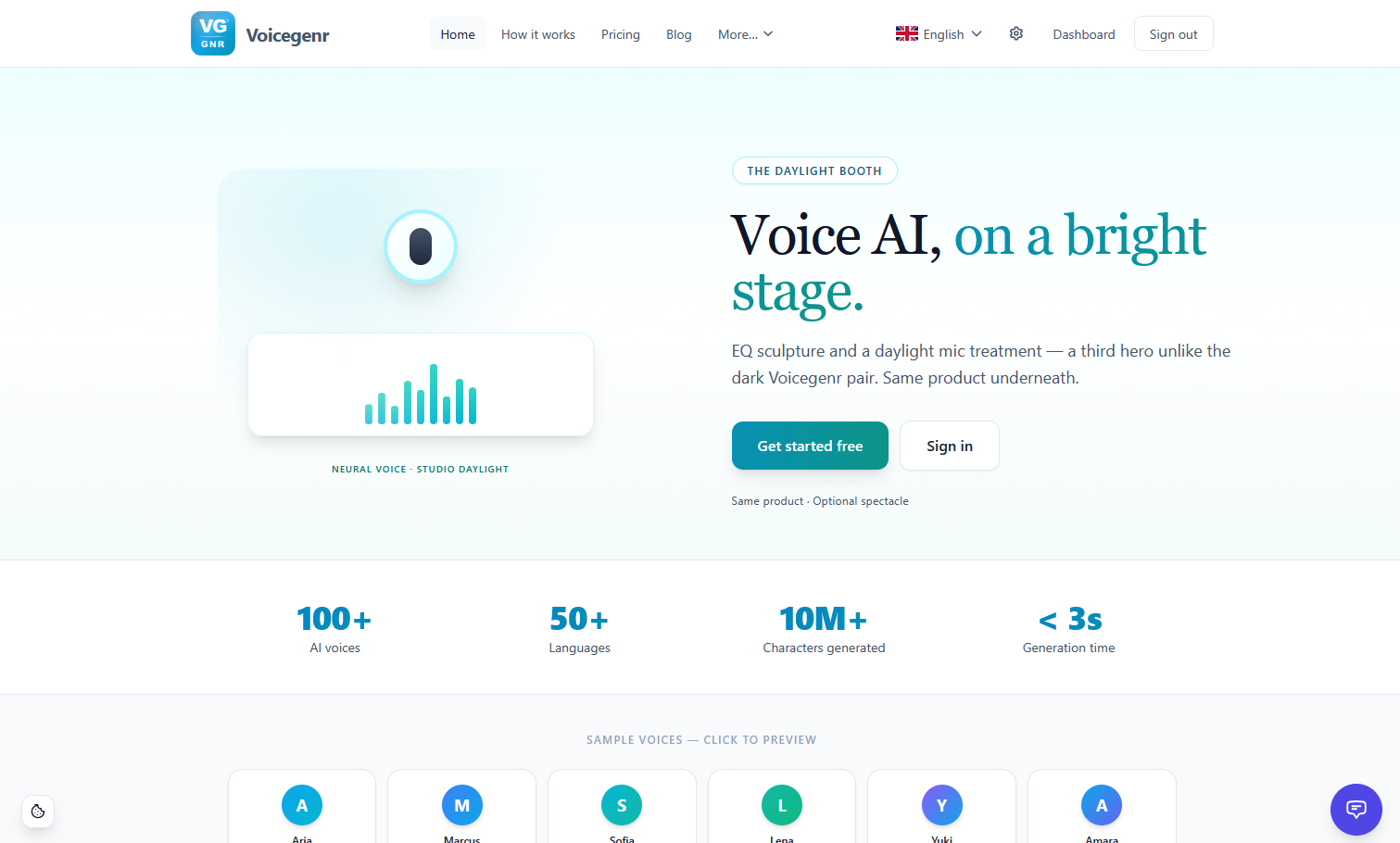
VoiceGenr
Overview VoiceGenr is a voice and audio product aimed at podcasters, educators, marketers, and app builders who need high-quality voice output, cloning where permitted, and a predictable billing model. The public site is organized around outcomes people pay for: faster production, localized variants, and consistent vocal identity across many assets. The copy avoids overclaiming “indistinguishable from a human in every case” and instead stresses clarity, controls, and iteration speed—what professional users optimize for. Go-to-market flexibility • Subscription tiers, usage-based credits, and one-time project packs—important because “minutes processed” and “retention of assets” are natural meters. • Onboarding that is easy to show: script in, pick a profile, preview, export, with a visible path to API access for developers. • Policy in plain language on consent, impersonation, and prohibited use—real conversion enablers for serious buyers, not just compliance theater. Team and org features (without looking “enterprise only” on the home page) • Org billing, folders, and audit-friendly exports can live in comparison tables and use-case pages. • Pro features such as pronunciation dictionaries, style presets, and SSML-friendly editing for long series. • Security conversations: watermarking, traceability, and org-wide controls for regulated buyers. Partnerships and ecosystem The story can extend to hosting providers, learning platforms, and creative tools because the product is not locked to a single use case—only to reliable, high-quality output and dependable delivery. Analytics are straightforward to describe: minutes generated, project counts, seat growth, and funnel tracking from trial to first successful output. In summary, VoiceGenr is a well-scoped asset in the creator–developer overlap: pricing that can survive real cost structures, and a public surface that can grow with policy, product, and partnerships over time.
 Ecommerce
DiggyMarket
Overview DiggyMarket is an ecommerce-leaning web property for selling digital goods and lightweight physical bundles with a storefront that looks credible on first visit. The public experience foregrounds product storytelling: value props, specs, social proof, and a checkout path that does not feel bolted on. The tone is consumer friendly while still appropriate for small brands that care about returns, chargebacks, and long-term trust. Storefront building blocks • Collections, comparison, and FAQ to reduce pre-purchase support load. • SEO entry points via category pages, guides, and trust content so the business reads as real, not as a one-page test. • Positioning as a template for niche shops, a single-brand DTC play, or a testbed for subscriptions and member perks on top of a core catalog. Commercial and operations depth • Payment story (e.g. Stripe) named at the right level of detail—credible without vendor lock-in in the copy. • Policy pages for refunds, shipping, and tax regions as you scale internationally. • Merchandising headroom: bundles, order bumps, related products, and tests once baseline traffic exists. Growth levers that compound Reviews, UGC, and Q&A to lift conversion and long-tail search. Loyalty, referrals, and gift cards as simple AOV and repeat levers. B2B-friendly quotes, net terms, and invoicing on appropriate plans without changing the whole brand. Operations can be described as warehouse-lite or pure digital delivery with equal clarity, so the next owner can match the site to their actual fulfillment model. Overall, DiggyMarket is a flexible ecommerce marketing asset: conversion-first, brand-safe, and ready to grow through catalog depth, content, and operations maturity rather than a single gimmick.
 B2B Leadgen
AILeadGenr
Overview AILeadGenr is a B2B lead generation property with one clear job: help service providers, agencies, and consultants turn attention into qualified conversations. The public site is built to explain a narrow offer, establish credibility, and ask for a concrete next step—book a call, request an audit, or complete a short form that routes leads intelligently. The design favors clarity over cleverness, because a busy buyer will leave if the model is not obvious in a few seconds. Messaging that works across verticals • Marketing, custom software, data, and AI implementation can be addressed without locking the brand into a single box. • Case studies, outcome metrics, and “how we work” diagrams help visitors self-select. • Forms tuned to ask for the minimum to book a high-quality meeting, not a fishing expedition. Trust and process • Security- and compliance-adjacent language (NDA, data handling, retention) where B2B buyers expect it. • Expectations for sales cycle, typical engagement size, and what kickoff looks like—reducing bad-fit leads. • Honest story for AI-assisted routing: helpful on deeper pages, not a black box on the home page. Technical and analytics story (without overbuilding the marketing) The product narrative can include analytics, CRM handoff, and automation on roadmap pages, while the MVP remains: a site that looks legitimate and makes people book. That helps both small acquirers and roll-ups that will stack tools behind the same brand. Mature brand extensions SLAs, regional coverage, and partner co-sell pages as you grow. Parallel paths for “book a call” vs “plan a program” with analytics on intent quality by segment. Content-led acquisition: playbooks, ROI calculators, and long-form pieces beside the product story as you move beyond founder-led sales. In short, AILeadGenr is a high-clarity B2B acquisition asset: strong conversion architecture, a narrative that can flex across services, and a measurement-friendly footprint for paid and organic growth—ready for the next owner to tune positioning and lead operations as volume scales.
10 of 10 projects